admin
admin 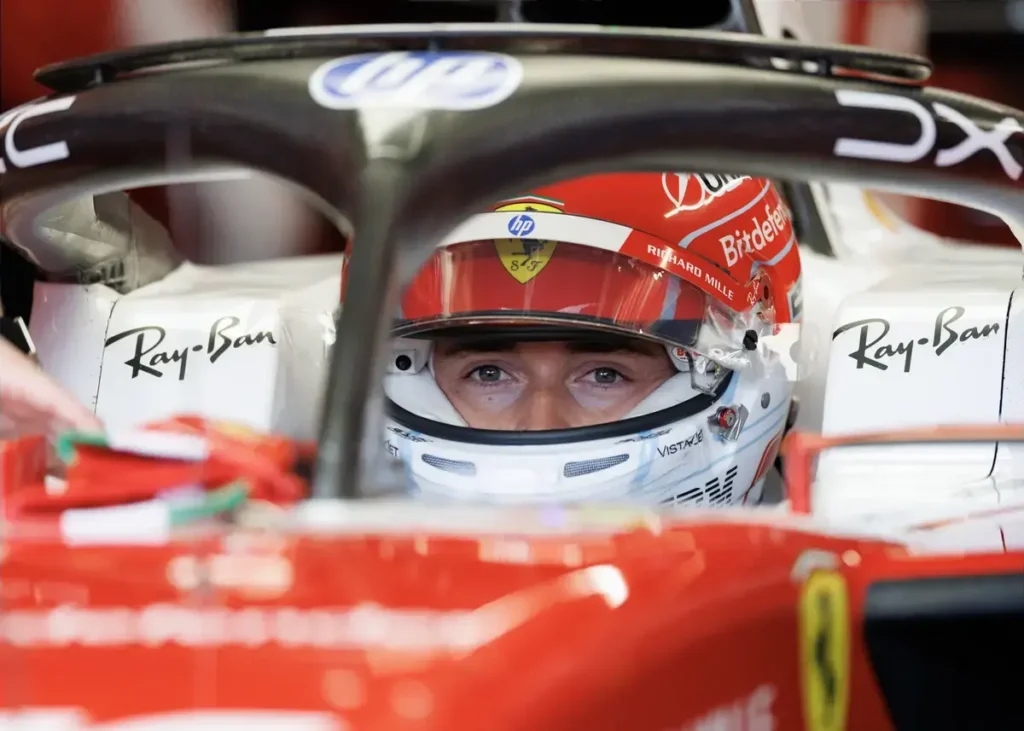
The Dutch GP has seen an influx of driver-related news, with Hadjar’s wrist injury and the contract extensions of Carlos Sainz and Alex Albon dominating recent headlines.
Of course, the market’s movements are central in shaping the grid. However, the development race is ultimately what will decide this year’s Championship – and this is where personnel in the factories are operating at maximum capacity.
Ferrari are one of the main challengers in 2026, thanks to an SF-26 machine that has given Mercedes some headaches. Ahead of this weekend’s action in Zandvoort, positive information is emerging about Ferrari’s upgrades.
New power unit progressing well
In the budget cap era, development is an exercise of efficiency and prioritisation. Teams must decide whether to focus on short or medium-term improvements, and such choices have immense consequences.
For this season, the front-runners (Mercedes, Ferrari and McLaren) must take a choice – continue developing their 2026 cars or make an early switch to introduce more aggressive changes for 2027.
Ideally, teams aspire to hit two birds with one stone. Then again, in a sport decided by such fine margins, there is always some element of give and take.
Ferrari have taken the decision to push ahead with their development programme for the SF-26.
The first reason for this is their proximity to Mercedes, which has given the team a fighting chance of the constructors title – and even given Lewis Hamilton a potential window of opportunity to put pressure on Championship leader Kimi Antonelli.
Beyond this, Ferrari are very happy with their platform with the SF-26. This means that the macro decisions about their package, such as the suspension and chassis architecture, do not need to be completely revised for 2027.
As a result, they can press on with updates on the SF-26 whilst still working on next year’s car – since the foundational aspects of this season’s challenger will carry over into next year.
Most notably, and improvements to the engine will also be enjoyed in 2027. It is precisely the Ferrari power unit that Fred Vasseur has identified as the biggest vulnerability to Mercedes – at least in terms of horsepower.
Speaking of which, Ferrari’s new engine is reportedly expected to deliver an additional 13 horsepower – as measured in tests on the dyno.
This would be worth 2-3 tenths on track, representing enough lap-time to tip the scales against Mercedes and McLaren. Of course, performance is not the only area to consider.
Multiple races in 2026, including Ferrari’s two victories in Spain and Britain, have been decided by reliability.
The Scuderia’s reliability has been a strong point, and therefore there is no intention to introduce upgrades that will compromise reliability and significantly increase the chances of failures and DNFs. Thanks to the diligent work at Ferrari’s base in Maranello, the improvements to the engine should not come at the expense of anything else.
If anything, the changes to the power unit are not only focused on horsepower or even electrical efficiency. As reported by motorsport.it, Ferrari’s engine supplier (Shell) has made changes to their fuel mix to increase efficiency.
In addition to this, the personnel in Maranello have worked to modify the energy deployment and torque of the engine. In short, the objective is to minimise wheel spin at corner exit – beneficial for lap-time and also tyre management.
Floor update for Zandvoort
This engine updates, and the other associated changes, are due to arrive in Monza. In traditional fashion, the Italian squad has prepared a step forward on home soil.
With that said, there will also be updates in the meantime. As previously reported on LWOS, the Scuderia are also working on aerodynamic updates alongside the power unit.
Only by unlocking more performance in both areas can Ferrari out-develop Mercedes, who also have one engine update available via ADUO – though it remains unclear when Toto Wolff’s team will have their updated engine ready.
Regardless, a new floor is scheduled to arrive in Zandvoort. This will be a critical step in the team’s quest to respond to McLaren, whose Hungary update package was significant – particularly since it delivered more downforce on the MCL40 whilst also keeping tyre degradation to a minimum.
Since this weekend’s Dutch GP is a Sprint weekend, time will be of the essence across the field.
Ferrari, along with the rest of the field, will only have one practice session before Sprint Qualifying. Of course, they will be permitted to make set-up changes ahead of qualifying on Saturday.
Regardless, the Scuderia are not allowing limited practice time to dampen their ambitions. There is a belief that Mercedes are genuinely within striking distance, so every step of development is critical – both in terms of impact and time of arrival.